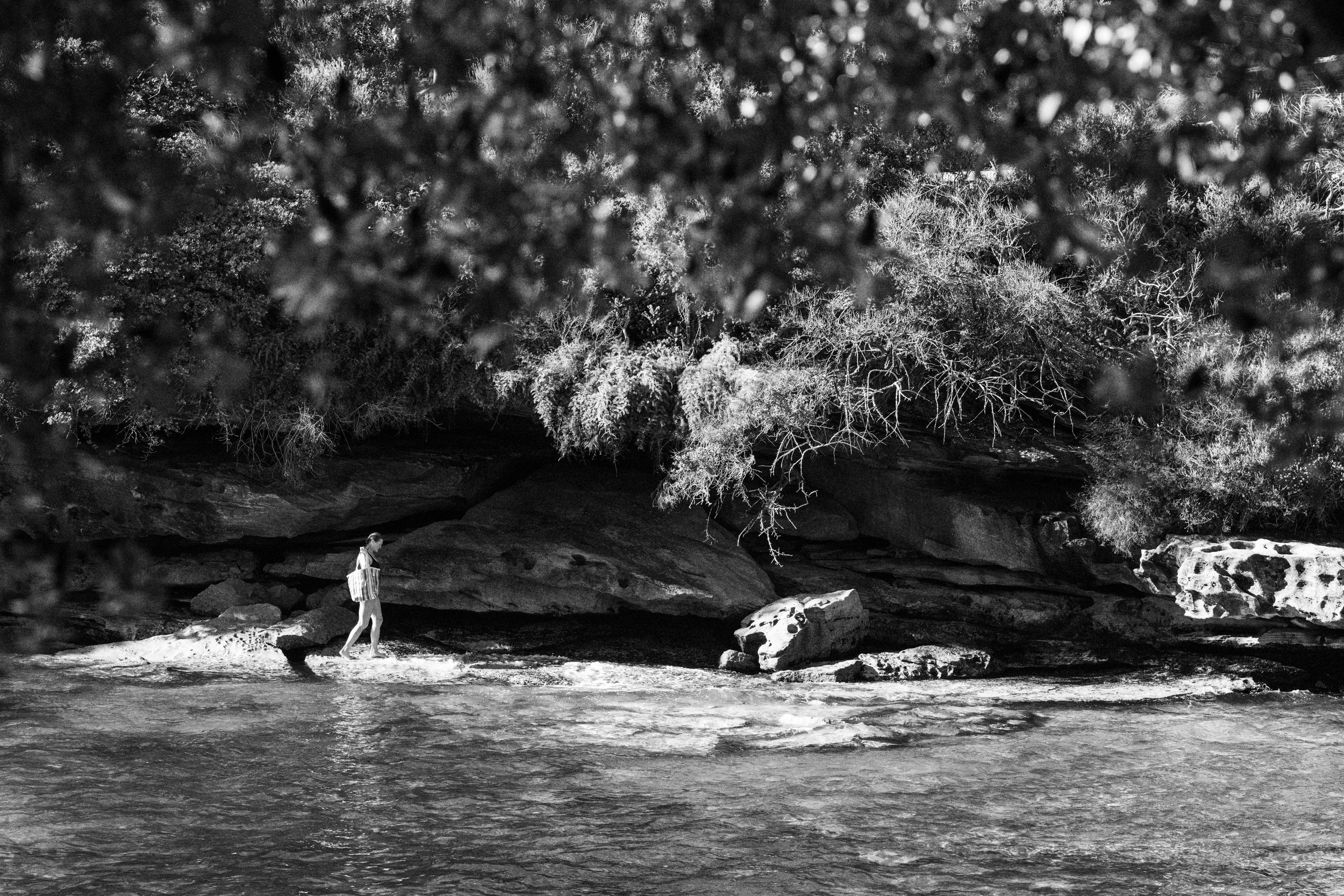
At home when walking is my living notebook.
I share photographs, field notes, poems, walks, project updates, and fragments from my ongoing artistic research. It is where walking, photography, writing, and everyday life meet.
Interior Streets: A Sydney Arcade Lexicon
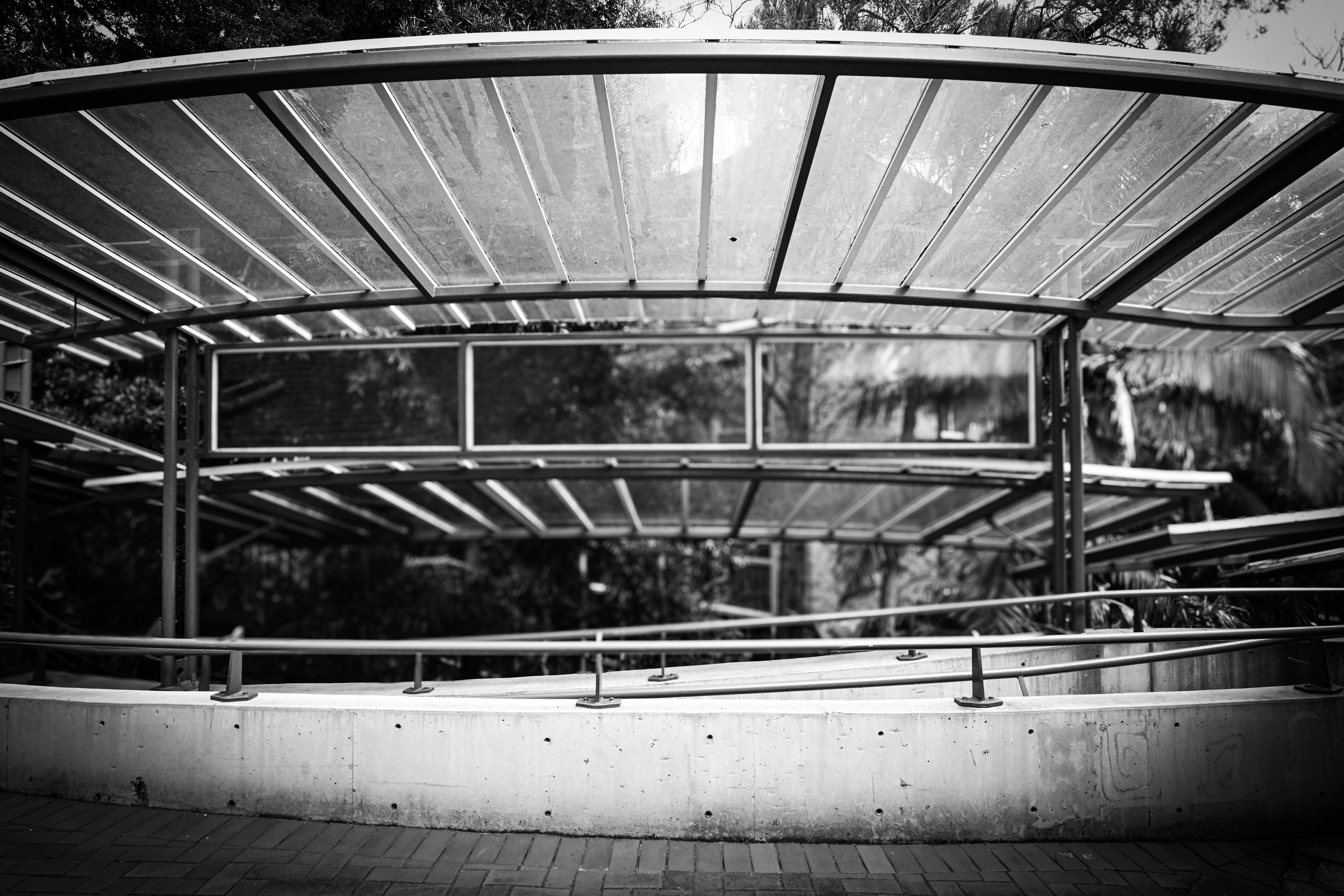
I photographed this covered walkway at UNSW Kensington Campus in August 2024.
At the time, I was probably only following light, glass, railings, and the quiet geometry of walking. Now I see it differently.
It belongs to a larger question I am beginning to shape:
How do covered passages, arcades, campus walkways, shopping corridors, ramps, signs, shopfronts, and thresholds form another city inside the city?
An arcade is not only a place to buy things. It is an interior street. A small urban machine for walking, sheltering, looking, passing through, waiting, meeting, and reading signs.
I am thinking through this as a built environment research project: part archive, part photography, part walking fieldwork, part lexicon.
The working title is:
Interior Streets: A Sydney Arcade Lexicon
The project would look at Sydney’s arcades and covered passages from the CBD to the suburbs, through architectural archives, contemporary photography, walking routes, colour, signage, multilingual shopfronts, and the everyday intelligence of shortcuts.
A few lexicon notes from today:
canopy - a roof that turns walking into an interior act
ramp - a slow agreement between body, slope, and access
glass - shelter that still lets the outside enter
arcade - a street that has gone indoors
Photo: Covered Walkway, UNSW Kensington Campus, Sydney, Australia, August 2024
#Sydney #BuiltEnvironment #Architecture #Walking #Photography #UrbanResearch #SydneyArtist #UNSW #Arcades #InteriorStreets
“I prefer the absurdity of writing poems
to the absurdity of not writing poems.”
Wisława Szymborska, “Possibilities”
Translated by Stanisław Barańczak and Clare Cavanagh
This line stayed with me today.
Maybe writing, walking, photographing, applying, trying again, all have their own absurdity.
Yet not doing them has another kind.
Winter Method
At home
the room became larger
than the work.
Cold has this talent.
A call waited.
A website waited.
The dishes also waited
with domestic patience.
Then the door opened.
Not for revelation,
only for groceries,
or air,
or the body’s old argument
with the chair.
On the way,
one idea returned
through the feet.
Nothing spectacular.
No trumpet.
No grant letter.
Just a thought
crossing the street
without asking permission.
Perhaps this is how work continues:
not by confidence,
but by motion.
A lens in the bag,
extra batteries,
postcards,
a filter ring
for what gets stuck.
Sydney was wet.
Winter was undecided.
The pavement kept
its small archive of light.
And the camera,
poor honest machine,
believed everything
for one fraction
of a second.
Later,
one could say
nothing happened.
Except the walk.
Except the warmth.
Except the idea
that came back alive.
👣 Independent artist and Doctor of Arts working across walking-based artistic research, photography, writing, and urban study. Open to commissions, collaborations, or conversations about collecting my work: www.sepasama.com
#Walking #ArtisticResearch #Photography #UrbanStudy #SydneyArtist
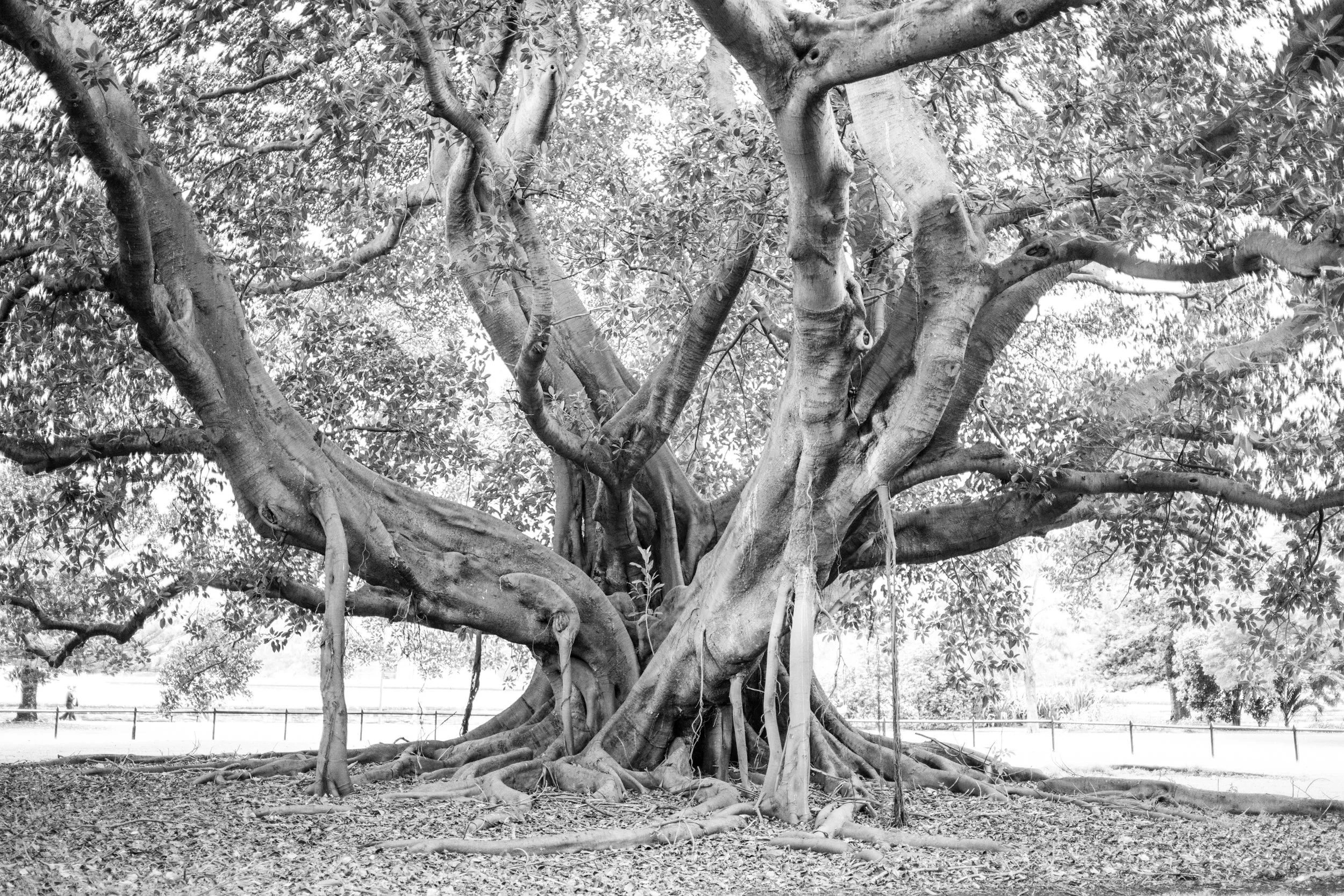
The Children’s Tree, Sydney, Australia, Winter 2026
What gathers under a fig tree?
A city, first.
Then air.
Then shade.
Then walkers.
Then birds, insects, roots, archives, roads, names, memory.
This Moreton Bay Fig, Ficus macrophylla subsp. macrophylla, stands in the Royal Botanic Garden Sydney. Its official label names it The Children’s Tree.
Dedicated on 11 April 1983, the tree carries a small civic story: pupils of Plunkett Street School were proclaimed custodians of it.
So the tree is not only botanical.
It is educational.
It is public.
It is a living archive of care.
Its roots move across the ground like a slow map. Its branches hold weather, animals, shade, and the pause of strangers passing beneath it.
Around the fig tree, walking changes.
The body slows.
The eye travels upward.
The city becomes less like a machine and more like a garden with memory.
A fig is a tree, but also a threshold:
between root and route,
between garden and road,
between childhood and custodianship,
between public space and private thought.
What does it mean to be a custodian of a living thing?
📖 Lexicon on Walking
fig threshold [urban nature] - a place where walking slows under the pressure of shade, roots, memory, and more-than-human life
👣 Independent artist and Doctor of Arts working across walking-based artistic research, photography, writing, and urban study. Open to commissions, collaborations, or conversations about collecting my work: www.sepasama.com
Photo: The Children’s Tree, Royal Botanic Garden Sydney, Sydney, Australia, Winter 2026

📮 Today I added a new section to my CV to name the work I am developing independently, outside formal structures, as daily artistic research:
Developing Lexicon on Walking, an ongoing artistic research project mapping the subject of walking through gestures, routes, thresholds, objects, language, nature, and everyday urban movement.
Developing Book 24, combining walking, photography, poetry, field notes, and artistic research.
Conducting daily walking-based fieldwork across Sydney through photography, writing, voice notes, and urban observation.
Maintaining an independent archive of photographs, walking notes, poems, field texts, and research materials connected to walking, photography, and urban study.
CV, profile and reading on walking list: https://www.sepasama.com/about
👣 Independent artist and Doctor of Arts working across walking-based artistic research, photography, writing, and urban study. Open to commissions, collaborations, or conversations about collecting my work.
Photo: Alison Road, Randwick, Sydney, Australia, Winter 2026
👣 In March 2026, I gave this talk on walking as an artistic and research practice, as part of WALC and the Australian Walking Artists Network.
In the talk, I shared how my work explores walking through body, landscape, language, and environment.
This practice developed through my Doctor of Arts in Europe, within an Erasmus+ Programme across Poland, Sweden, and Estonia, and now continues here in Australia.
I see walking as a nomadic and multilingual practice: moving across different lands, languages, everyday life, and distinct metaphors.
This research is now continuing through Book 24 on walking, photography, writing, and an ongoing lexicon body on walking, mapping the subject of walking across places, gestures, languages, and daily descriptions.
Walking, for me, is not only movement.It is a way of reading the world through the body.
If your institution, university, walking group, or organization is interested in talks or workshops on walking as artistic practice, feel free to connect.
📮 The Turning City
The city turns
before it lets me in.
Glass carries the street,
the lobby,
the stranger,
the building across the road.
A door begins to think
in circles.
Inside, outside,
reflection, body, weather, stone.
I walk through,
yet nothing is crossed completely.
Only turned.
Only seen again.
Sydney CBD, Sydney, Australia, Winter 2026
I am mapping the subject of walking by walking, documenting, observing, writing, and making books, trying to understand how walking becomes a way of seeing, thinking, and staying with the city.
📖 Lexicon on Walking, ongoing
revolving door [architecture / walking] - a circular threshold where the body enters while the city continues to turn around it
turning city [walking image] - the moment when glass, movement, and reflection make the street appear unstable, alive, and almost liquid
threshold [walking / writing] - the place where one condition has not ended and another has not fully begun
reflection-walk [urban observation] - walking with the doubled city, where buildings, bodies, and streets appear both here and elsewhere
👣 Independent artist and Doctor of Arts working across walking-based artistic research, photography, writing, and urban study. Open to commissions, collaborations, or conversations about collecting my work.
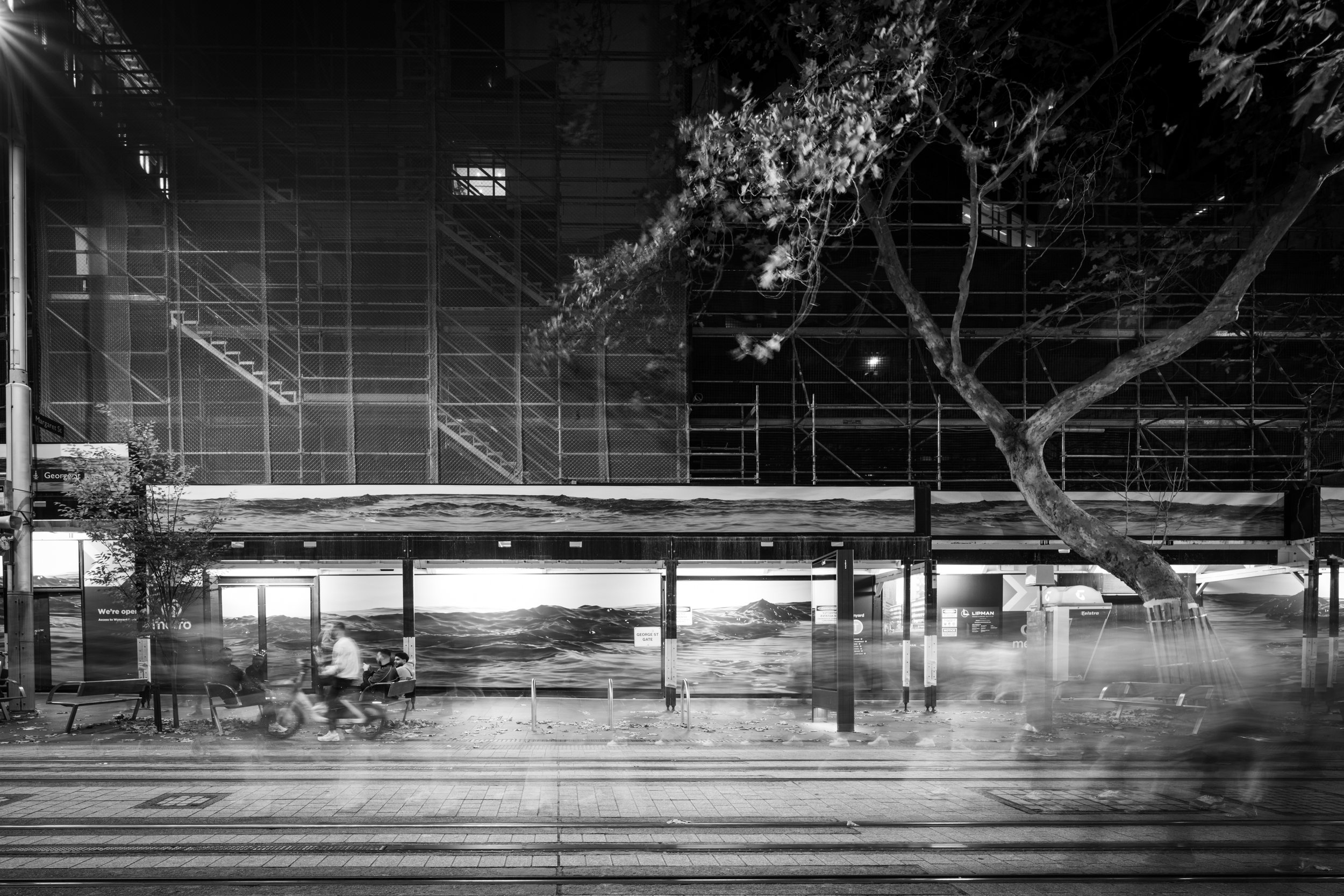
📮 Sea Behind the Fence
On the way back from Vivid Sydney, I stopped on George Street.
A construction site had become a temporary shoreline: scaffolding, light rail tracks, blurred pedestrians, a tree in the dark, and a dark blue sea stretched across the fence.
The public artwork is Equivalence by Ash Garwood, part of the City of Sydney Creative Hoardings program.
I love this initiative. A blank construction wall becomes a public encounter. The city is fenced, repaired, demolished, rebuilt, yet the pedestrian is still given beauty.
But the same work also made me think about gates.
When I looked at a recent City of Sydney call connected to this program, eligibility was limited to Australian citizens or permanent residents.
For some people, that is administration.
For artists who have lived through visas, countries, languages, universities, and migrations, it becomes time. Years of it. Sometimes decades.
Global cities benefit from movement. They benefit from people who arrive carrying images, methods, labour, memory, and language.
But when participation begins, the form often says: wait.
Wait for the visa.
Wait for residency.
Wait for citizenship.
Wait again.
Waiting becomes a bench.
You may watch the game, but not yet play.
This is not against Sydney. I love Sydney. I love this street. I love that a construction site can hold a sea.
But love also notices the fence.
The sky does not ask where I was born.
The sea does not ask for my papers.
Trees do not check eligibility before giving shade.
To be born on this planet should be enough to begin calling a place home.
And still, I walk. I photograph. I write. I keep the fire alive because the world is larger than the gate.
George Street, Sydney CBD, Sydney, Australia, Winter 2026
Public artwork: Equivalence by Ash Garwood, City of Sydney Creative Hoardings program
👣 Independent artist and Doctor of Arts working across walking-based artistic research, photography, writing, and urban study. Open to commissions, collaborations, or conversations about collecting my work.
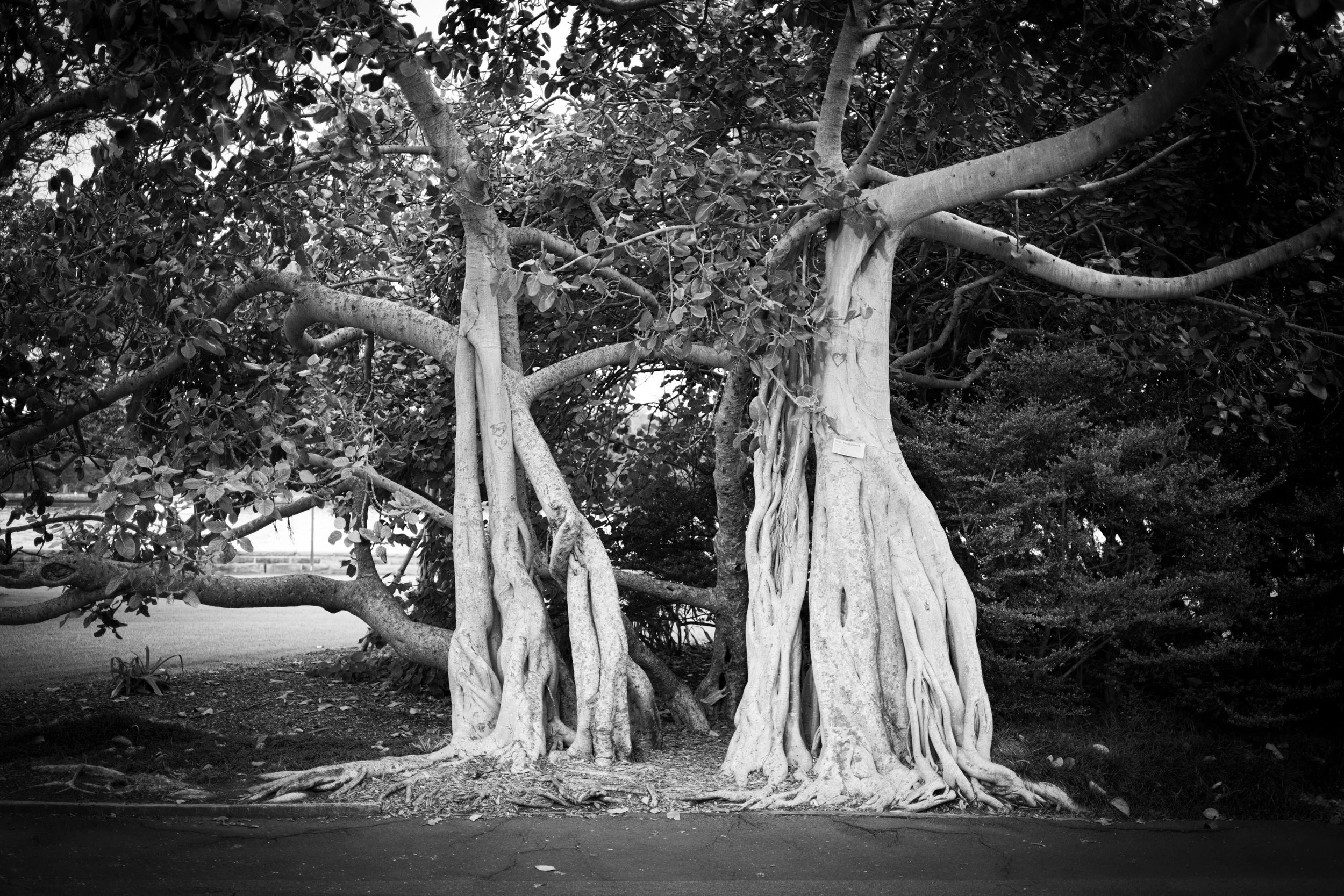
📮 For love
For love,
for standing together,
for endurance,
for being from India,
for being here,
for standing for everything you have carried.
For the politicians who ask
whether we should be here or not.
For home,
for homelessness,
for home when walking.
For outside,
for inside,
for what we keep in our hearts,
for what we carry in our minds.
For togetherness,
for our own spaces,
for moments of contemplation.
For labels,
for who we are,
for who we are not,
for who we are still trying to become.
For trying to be better humans,
for finding better ways.
For reaching the ground,
for reaching the sky,
for holding each other’s hands.
For never giving up.
For life,
for love,
forever.
Sydney Botanical Garden, Sydney, Australia, Winter 2026
👣 Independent artist and Doctor of Arts working across walking-based artistic research, photography, writing, and urban study. Open to commissions, collaborations, or conversations about collecting my work.
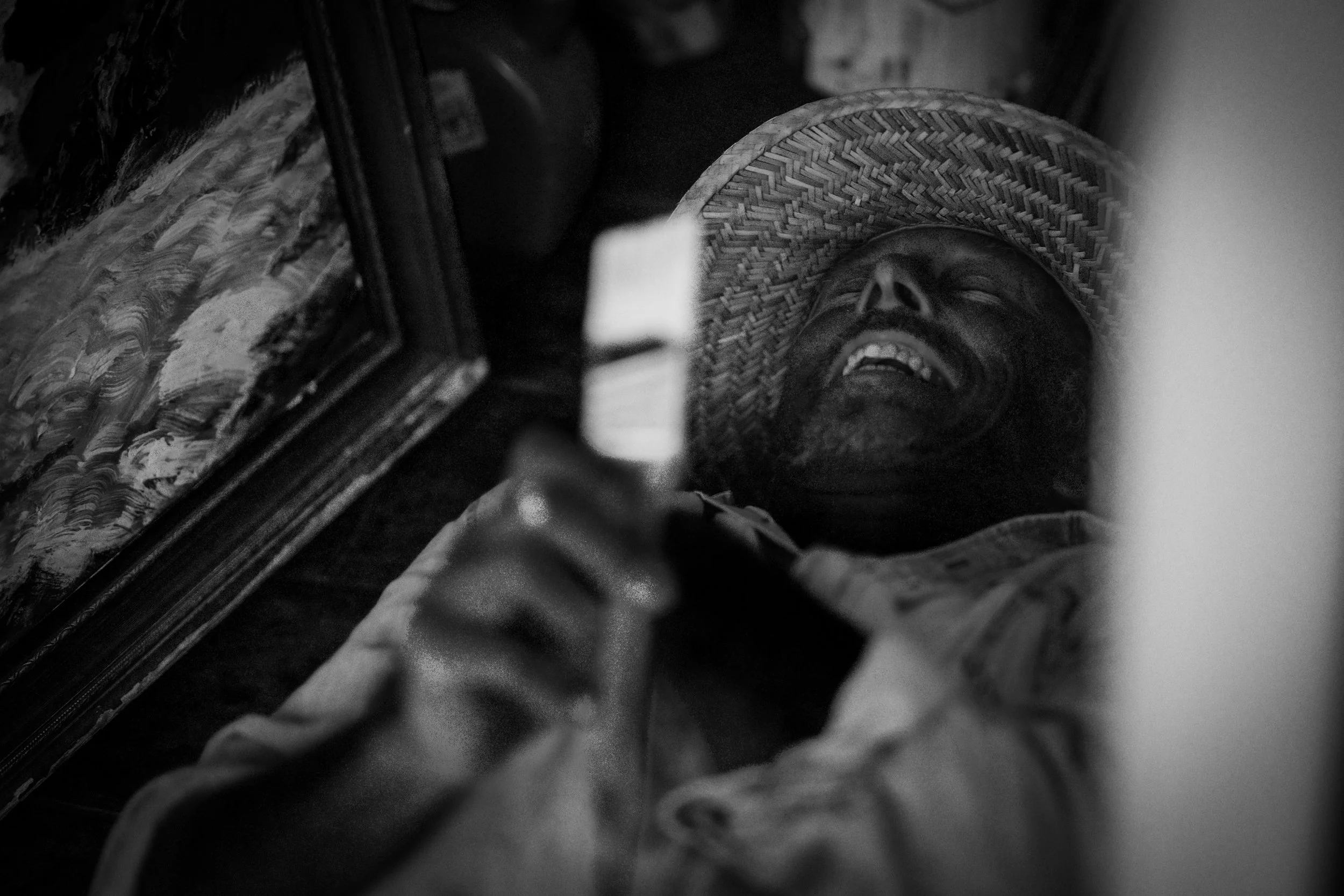
Heart of Gold
More than two years ago, during my first week in Randwick, I walked along Belmore Road and passed a small shop called Boston.
Behind the counter was Will.
He smiled, welcomed me, and somehow made a stranger feel less strange.
Since then, I have passed his shop countless times. Sometimes I bought something. Often I simply stopped for a conversation. What stayed with me was not only the shop itself, but the human behind it.
Will is a businessman, yet he is also an artist.
His shop carries clothing, music, photographs, stories, and traces of the people who gather there. A poem hangs from the ceiling. Musicians play. The bell rings. Conversations begin.
Over the years I have watched people from many walks of life stop outside Boston. Musicians, workers, elderly neighbours, people doing it tough, people who might be overlooked elsewhere. Will welcomes them all.
In a city increasingly shaped by franchises, rules, and transactions, there is something rare about a place where people are seen as humans first.
I once heard someone dismiss the crowd outside his shop. I disagreed.
What I see is a person who recognizes dignity where others may only see labels.
As an immigrant, I know what it feels like to arrive somewhere and discover that many of the roots you once relied upon no longer reach the ground. You begin again. Slowly. Like a seed learning a new soil.
During those years, Will's smile was one of the constants.
He told me that business is not always easy. Yet even on difficult days, he shows up with generosity, humour, and kindness.
That is why I call him a human with a heart of gold.
This is not a sponsored post.
It is simply a note of appreciation.
If you are walking along Belmore Road in Randwick, stop by Boston. Listen to the music. Say hello to Will. Support independent shops while they are still here.
Places matter.
Yet sometimes it is the people inside them who become part of the map.
Belmore Road, Randwick, Sydney, Australia, Winter 2026
👣 Independent artist and Doctor of Arts working across walking-based artistic research, photography, writing, photobooks, and urban study. You can support and join this journey through commissions, collaborations, collecting works, artist talks, workshops, and walking-based projects.
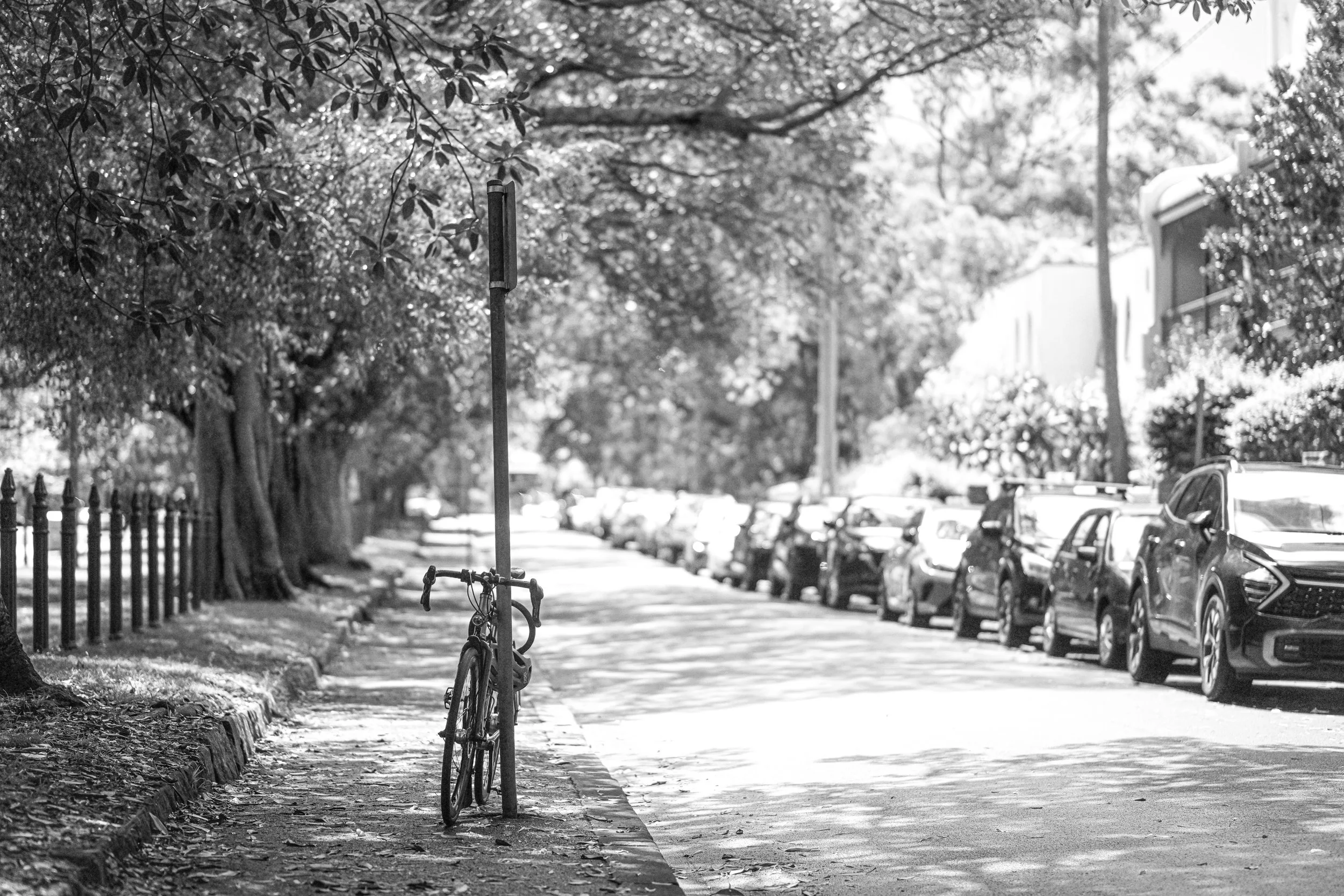
Wake Up, It’s Morning Now
Last night I watched the story of Bikram Lama, a Nepali man who came to Australia as an international student and later died while sleeping rough in Sydney’s CBD.
The story stayed with me.
I came to Australia with hope.
Nearly two years later, I find myself reflecting on a contradiction that reaches far beyond one country.
Universities celebrate global rankings.
Cities celebrate diversity.
Governments speak about innovation, talent, and international exchange.
These things matter.
Yet there is another side to the story.
Many of the people who help make a city global remain excluded from the resources that sustain life within it.
International students pay fees.
Researchers bring knowledge.
Artists contribute culture.
Workers fill essential roles.
Yet many live with housing insecurity, precarious employment, uncertain visas, and limited access to support.
The contradiction is difficult to ignore.
We benefit from internationalism, yet often distribute security through increasingly local and restricted systems.
A society becomes stronger when it attracts people from around the world.
The question is whether it is willing to care for those same people when they struggle.
Walking through Sydney, I see posters celebrating inclusion.
I believe many of those commitments are sincere.
Yet walking also reveals another city.
The city of shared rooms, rising rents, food queues, uncertain papers, and people carrying extraordinary qualifications while struggling to secure the basics of life.
This is not only an Australian question.
It is a global one.
What obligations do we have toward the people whose labour, knowledge, creativity, and presence help make our institutions successful?
Every society celebrates its achievements.
The harder question is:
Who carried the weight?
Who was welcomed as talent, yet abandoned as a person?
And what happens to those who are forgotten along the way?
I dedicate this photograph to Bikram Lama.
May the morning arrive for those still carrying the night.
Learn more: https://www.youtube.com/watch?v=_bnY_drWXNc
Sydney, Australia, Winter 2026
Artist and Doctor of Arts working across walking-based artistic research, photography, writing, and urban study. Available for commissions, artist talks, workshops, and collaborations.
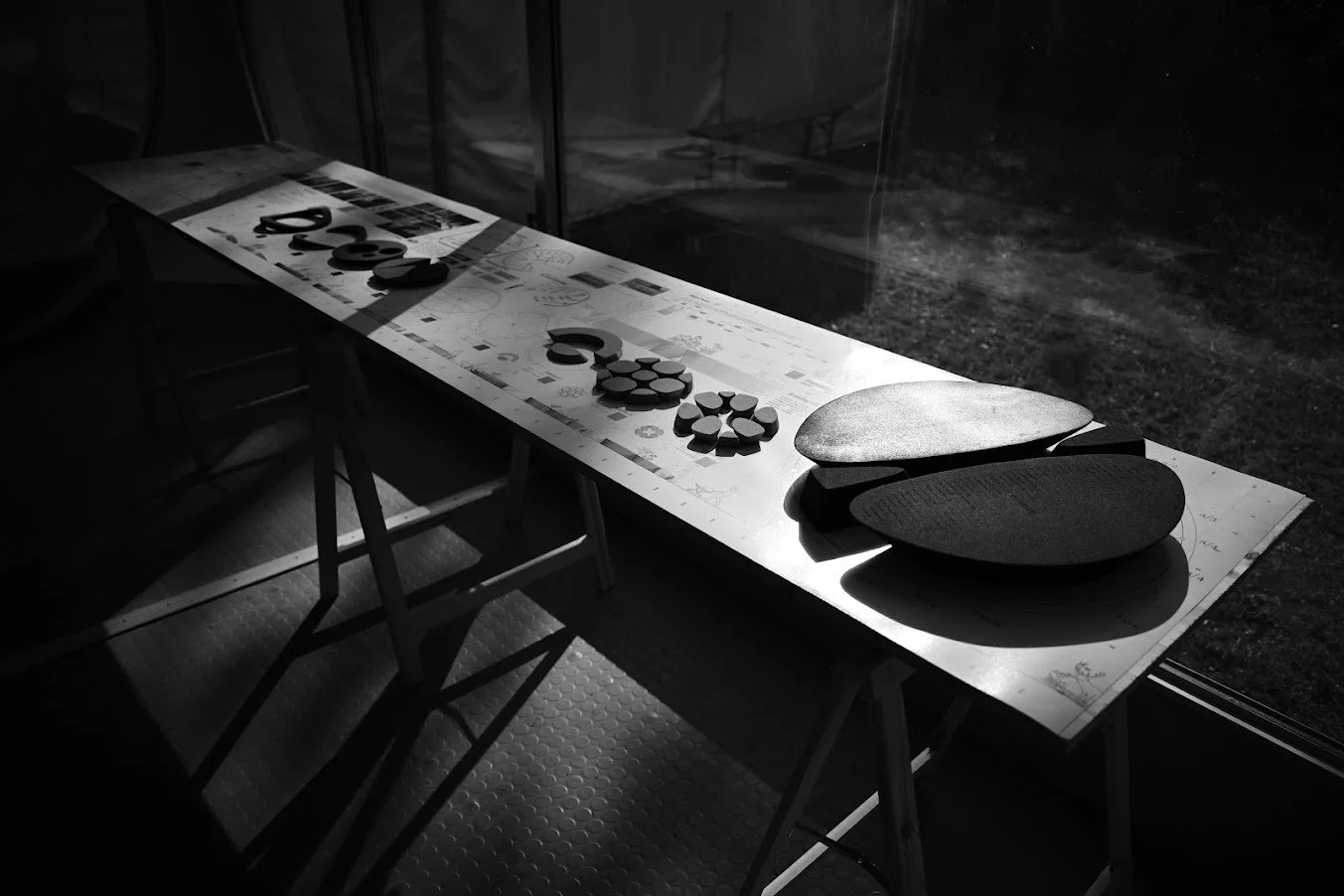
The Seed: Biophilic Bench Design Studies by Jumana Hamdani and Sepa Sama. Developed through the Land Arc project at Kivik Art Centre and Lund University, the work is now included in Rumble60 at UCLA Architecture and Urban Design. It explores sitting, walking, landscape, public space, and artistic research.
Photo: Sepa Sama
Los Angeles, USA, June 2026
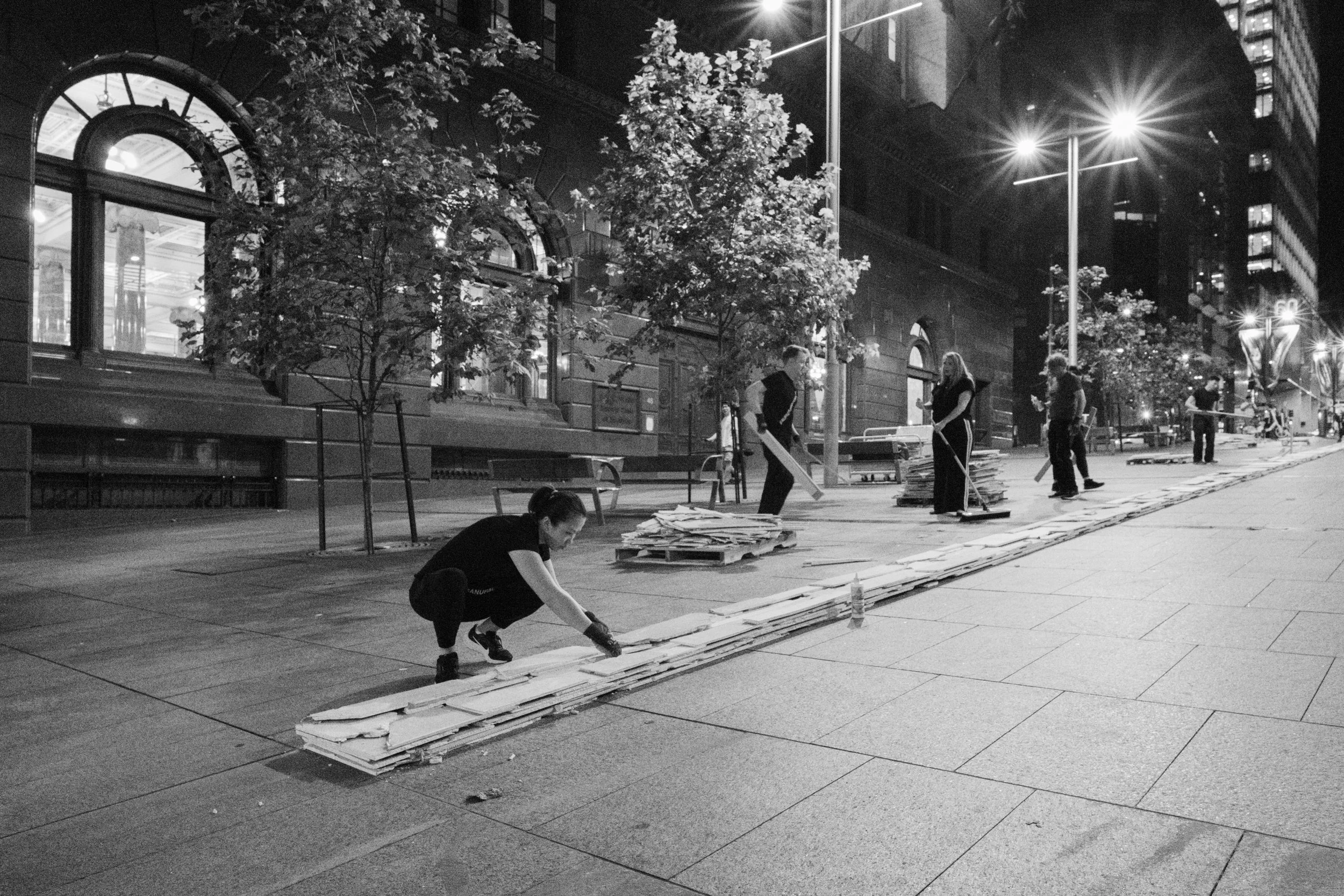
Shattered Topography: A Monument to Waste — photographic documentation of a public installation at Martin Place during Climate Action Week Sydney. Commissioned through UNSW, the work records a temporary urban intervention constructed from discarded construction material, reflecting on material cycles, waste, and climate responsibility within the everyday space of the city.
This image forms part of my ongoing practice connecting walking, urban observation, and photography as artistic research in public space.
Photo: Sepa Sama
Sydney, Australia, March 2026

Barrett House Residency — Final Exhibition
As my residency at Barrett House Studios came to a close, the final exhibition brought together the work of three resident artists: Ruby Blinkhorn, Luanne Mitchelmore, and Sepa Sama.
Presented at Barrett House Studios in Randwick, the exhibition marked the culmination of three months of artistic development across writing, place, architecture, walking, film, light, and sound.
During my residency, I shifted from developing a book toward making a collaborative film with artist Bibi Soleimani. Filmed along the Randwick LGA coast, You Never Walk Alone explores walking as a poetic act of listening, transforming book-based artistic research into movement, image, sound, and shared reflection.
Photo: Mark Bond
Randwick, Sydney, Australia, November 2025